 |
Learn more about our Mental Health First Aid Courses |

Child Welfare Workshop 2026
April 17 @ 8:15 am – 3:30 pm
The 2026 Child Welfare Workshop Planning Committee invites you to join us for a full day of learning and connection with peers.
We are delighted to announce that this year’s workshop will be held at the brand new state-of-the-art MSOM – Meritus School of Osteopathic Medicine Fletcher Conference Center.
The 2026 workshop will feature a range of timely and practical topics designed to Inject Hope To Those We Serve and For Those Who Serve.”
Participants who attend the entire workshop will be eligible to receive a Certificate of Attendance for 5.5 CE hours for counselors/therapists (NBCC), as well as Maryland licensed social workers and psychologists. Please note: full attendance is required; partial credit is not available.
Registrations Now Open!
*full attendance required – no partial CE Hours will be awarded
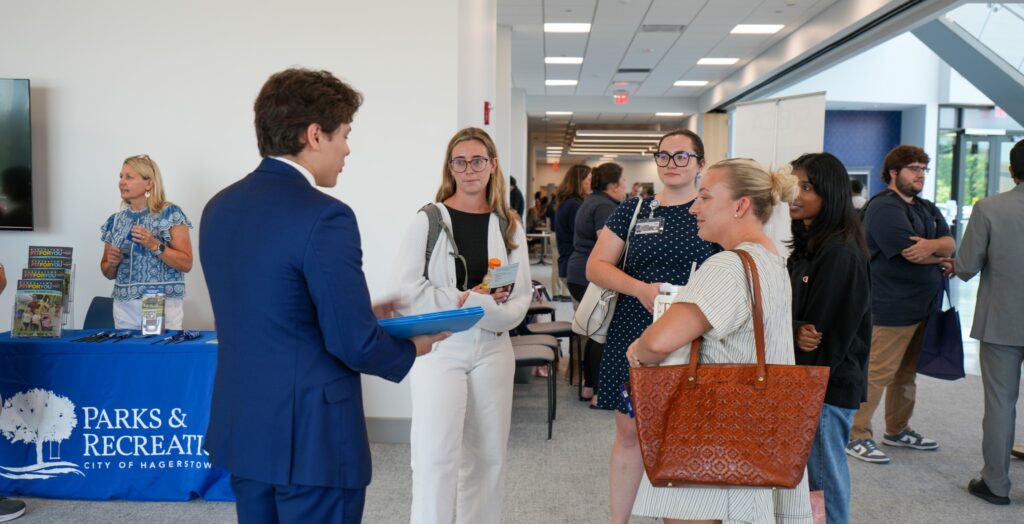
Connect with the community: Reserve your Exhibit Space today.
*NOTE to DSS Attendees: To register for this event please see Barbara Shevokas, DSS Child Welfare Workshop contact.
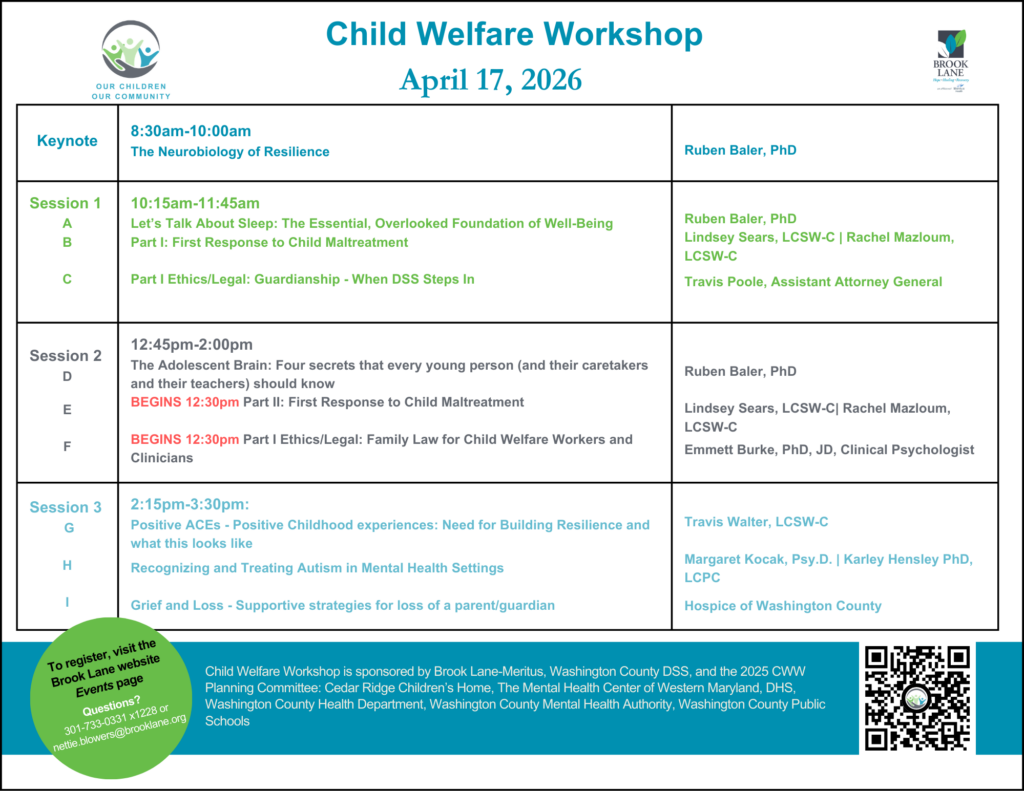
CWW 2026 WELCOME | 8:15am
Keynote Address | 8:30am-10:00am
Keynote Address | The Neurobiology of Resilience
Featuring: Ruben Baler, PhD
From the National Institute on Drug Abuse (NIAD), Dr. Baler joined the Science Policy Branch in NIDA’s Office of Science Policy and Communications in October 2004 as a Health Science Administrator. He has gathered critical insight from diverse disciplines, which he combines to advance NIDA’s scientific mission as it intersects with cellular and molecular biology, genetics, immunology, bioinformatics, neuroscience, and neuroethics. Dr. Baler’s many contributions to other dissemination efforts include scientific writing, teaching, public speaking to lay audiences, and fielding interview requests. He received his PhD in Microbiology and Molecular Biology from the University of Miami.
Course Description
Why do some people adapt and recover in the face of stress and adversity while others become more vulnerable to harmful behaviors—including substance misuse? This course examines resilience through the lens of modern neuroscience and evolution. As our environments change faster than our biology can adapt, the human brain—remarkably powerful yet built with evolutionary constraints—can become mismatched to today’s stressors and temptations. Understanding that mismatch is essential for explaining both the strengths that support resilience and the vulnerabilities that increase risk.
Participants will explore the brain’s foundational architecture and the evolutionary pressures that shaped it, then connect that biology to real-world behavior. The course explains how addictive drugs alter brain circuitry—especially reward and motivation systems—changing learning, decision-making, and self-control. Building from that foundation, we examine why exposure does not affect everyone the same way, emphasizing the multifactorial nature of risk and protection across development and contexts.
The course concludes by translating neuroscience into action: how evidence-based prevention, harm reduction, treatment, and recovery strategies are designed to reduce risk, strengthen protective factors, and support sustained wellness. Participants will leave with a clearer framework for understanding substance use disorders as brain-based conditions influenced by biology and environment—and for using that understanding to strengthen resilience at individual and community levels.
Course Objectives
By the end of this course, participants will be able to:
- Explain how brain structure, function, and evolution shape resilience and vulnerability
- Describe core brain systems involved in motivation, stress response, learning, and self-regulation and how evolutionary constraints influence behavior in modern environments.
- Outcome: Accurately identify major brain functions relevant to resilience and explain at least two examples of “evolutionary mismatch” that affect decision-making or risk behavior.
- Describe how addictive drugs alter brain circuitry, with emphasis on dopamine signaling
- Explain the role of the dopaminergic synapse in reward learning and how drug exposure produces neurophysiological changes that can drive compulsive use.
- Outcome: Summarize, in clear terms, at least three drug-related changes in brain function (e.g., altered reward sensitivity, impaired inhibition, heightened cue reactivity) and link each to behavioral consequences.
- Distinguish acute effects from longer-term neuroadaptations relevant to substance use disorders
- Differentiate short-term intoxication/withdrawal effects from enduring changes in circuitry that contribute to craving, relapse risk, and impaired control.
- Outcome: Correctly categorize examples as “acute” vs. “neuroadaptive/longer-term” and explain implications for prevention or treatment.
- Analyze interindividual differences in risk using a multifactorial framework
- Integrate biological, developmental, psychological, and environmental factors to explain why not everyone exposed to an addictive substance develops a substance use disorder.
- Practice: Apply a structured “risk–protection” worksheet to a brief case scenario.
- Outcome: Identify at least three risk factors and three protective factors in a case and articulate how their interaction influences risk trajectory.
- Apply neuroscientific concepts to resilience-building prevention strategies
- Translate understanding of brain development, reward learning, stress, and social context into prevention approaches that reduce vulnerability and strengthen protective factors.
- Practice: Draft a prevention strategy outline that targets a specific risk pathway (e.g., stress reactivity, impulsivity, social influence).
- Outcome: Produce a prevention plan with at least two evidence-informed components and a stated mechanism of action (“how it works” in brain/behavior terms).
- Explain harm reduction, treatment, and recovery as a continuum of evidence-based interventions (“cascade of care”)
- Describe the rationale and goals of harm reduction, treatment modalities, and recovery supports as integrated options to reduce morbidity and support functioning.
- Outcome: Correctly place common interventions along the cascade of care and state the intended outcome(s) for each (e.g., reduced overdose risk, improved retention, sustained recovery).
- Communicate brain-based concepts of resilience in clear, non-stigmatizing language
- Use accurate, lay-friendly explanations to describe substance use disorders and resilience without moral judgment, supporting empathy and effective engagement.
- Outcome: Produce a brief explanation (spoken or written) that avoids stigma, correctly conveys brain–environment interaction, and includes at least one actionable resilience-building takeaway.
Block 1 | 10:15am – 11:45am
Block 1 | Session A | Let’s Talk About Sleep: The Essential, Overlooked Foundation of Well-Being
Featuring:
Ruben Baler PhD from the National Institute on Drug Abuse (NIAD). Dr. Baler joined the Science Policy Branch in NIDA’s Office of Science Policy and Communications in October 2004 as a Health Science Administrator. He has gathered critical insight from diverse disciplines, which he combines to advance NIDA’s
Description:
Sleep isn’t just “down time.” It’s an active biological process that recalibrates the brain and body every day—and it is increasingly undercut by modern life. This course offers a clear, science-based tour of what sleep is, why we need it, and how daily choices can either protect or sabotage this essential foundation of health.
We begin with an accessible introduction to circadian biology -the internal timing system that helps coordinate alertness, hormones, temperature, mood, and performance across the 24-hour day. From there, we explore the neurobiology of sleep: what sleep actually is at the level of brain circuits, neurotransmitters, and sleep stages, and how these systems interact to produce a healthy sleep cycle.
Next, we tackle the “why” question. Why do we sleep, and what happens during sleep? We’ll examine how sleep supports learning and memory, emotional regulation, metabolic balance, immune function, and brain maintenance—highlighting the ways sleep helps the brain process information, reset stress systems, and restore physiological stability.
A key focus of the course is individual variability. You’ll learn what chronotypes are—why some people naturally feel sharper in the morning while others peak later—and how chronotypes shift across development, especially during adolescence and into adulthood. Understanding these biological rhythms can help explain everyday struggles with sleep schedules, productivity, and “social jet lag.”
Finally, we connect biology to real life. We examine lifestyle factors that commonly erode sleep quality, from irregular schedules and light exposure (especially at night) to caffeine, alcohol, stress, screens, and inactivity. The course closes with the public health perspective: the health costs of poor sleep hygiene, including effects on mood and mental health, the bidirectional relationships between substance use (and other psychiatric) disorders and sleep, attention and decision-making, cardiometabolic risk, immune resilience, and overall well-being.
By the end, participants will leave with a practical, evidence-informed understanding of sleep as a core driver of health—and a framework for making small, realistic changes that can produce meaningful improvements in how we feel, function, and thrive.
Course Objectives:
By the end of this course, participants will be able to:
- Explain core principles of circadian biology
- Summarize why sleep is necessary and what occurs during sleep
- Define chronotypes and analyze developmental changes
- Identify lifestyle factors that threaten sleep quality and quantify personal risk
- Evaluate the health costs of poor sleep hygiene
- Develop and implement an evidence-informed sleep improvement plan
- Use simple metrics to monitor sleep and interpret change over time
Block 1 | Session B | Part I: First Response to Child Maltreatment
Featuring:
Lindsey Sears LCSW-C is a Child Protective Services Program Administrator at the Washington County Department of Social Services. Lindsey has worked in child welfare for 8 years.
Rachel Mazloum LCSW-C is the Family Team Decision Meeting Facilitator at the Washington County Department of Social Services. Rachel has worked in child welfare for 11 years.
Description:
NOTE: First Response to Maltreatment is a 2-part session. Attendees MUST register for and attend both Part I and Part II to receive credit. This is a 3 CE hour course.
The workshop teaches participants how to listen to children who have experienced maltreatment and gather the correct information in a way that puts the child’s needs FIRST. This workshop is offered in partnership with the ZERO Abuse Project.
Course Objectives:
The FIRST response process teaches three critical components:
1. How to recognize signs and symptoms of abuse and maltreatment.
2. How to listen and respond to a child’s needs during their initial disclosure of alleged maltreatment.
3. How to effectively and accurately report any form of maltreatment to authorities.
Block 1 | Session C | Part I: (Ethics/LEGAL) Guardianship when DSS Steps In
Featuring: Travis Poole, Assistant Attorney General
Description: COMING SOON
Course Objectives: COMING SOON
Block 2 | 12:45pm – 2:00pm *Note Early Start
Block 2 | Session D (12:45pm – 2:00pm) | The Adolescent Brain: Four secrets that every young person (and their caretakers and their teachers) should know
Featuring:
Ruben Baler PhD from the National Institute on Drug Abuse (NIAD). Dr. Baler joined the Science Policy Branch in NIDA’s Office of Science Policy and Communications in October 2004 as a Health Science Administrator. He has gathered critical insight from diverse disciplines, which he combines to advance NIDA’s
Description:
Adolescence is not just a life stage—it’s a major brain-building project. Drawing on the foundational concepts from The Neurobiology of Resilience, this peer-led, interactive course gives middle and high school students something traditional education rarely provides: a clear, empowering explanation of how their brain is developing right now, why that matters for everyday choices, and how to protect that development.
The experience is anchored around four essential messages. Students learn that humans operate with two tightly connected but functionally distinct systems: an emotional/limbic brain that rapidly detects rewards, threats, and social signals, and a cognitive/frontocortical brain that supports planning, impulse control, and long-term decision-making. They explore how these systems mature on different timelines—and how this “developmental mismatch” can shape risk-taking, stress responses, emotional intensity, and sensitivity to peer influence.
From there, the course explains what is happening under the hood: the neurobiological processes that drive maturation, including changes in connectivity, efficiency, learning systems, and self-regulation. Finally, students examine how risk and protective factors—often subtle and easy to underestimate—can either disrupt or strengthen brain development. Throughout, short activities and guided exercises help students build metacognitive skills: the ability to notice their own thinking and emotions, anticipate consequences, and choose strategies that support healthy growth.
The goal is not to lecture students about what not to do. It is to equip them with a science-based framework for understanding their developing brain, recognizing influences that can hijack it, and practicing choices that strengthen executive function, emotional regulation, social cognition, and decision-making—skills that shape their trajectory well beyond adolescence.
(If time permits then presenter will describe the preliminary results of this intervention after 5 years of implementation with a core group of adolescents and young adults in Buenos Aires, Argentina)
Course Objectives:
By the end of this course, participants will be able to:
- Describe the two major operating systems of the adolescent brain
- Explain how different maturation rates influence decisions and behavior
- Identify key neurobiological processes involved in brain maturation
- Recognize how risk and protective factors shape brain development
- Apply a metacognitive “pause-and-plan” strategy to real-life situations
- Strengthen executive function skills through targeted exercises
- Build emotional regulation and social cognition using brain-based language
- Develop a personalized “brain-support plan” that increases protective factors
Block 2 | *Session E | START T
IME-12:30pm-2:00pm | Part II: First Response to Child Maltreatment
Featuring:
Lindsey Sears LCSW-C is a Child Protective Services Program Administrator at the Washington County Department of Social Services. Lindsey has worked in child welfare for 8 years.
Rachel Mazloum LCSW-C is the Family Team Decision Meeting Facilitator at the Washington County Department of Social Services. Rachel has worked in child welfare for 11 years.
Description:
NOTE: First Response to Maltreatment is a 2-part session. Attendees MUST register for and attend both Part I and Part II to receive credit. This is a 3 CE hour course.
The workshop teaches participants how to listen to children who have experienced maltreatment and gather the correct information in a way that puts the child’s needs FIRST. This workshop is offered in partnership with the ZERO Abuse Project.
Course Objectives:
The FIRST response process teaches three critical components:
1. How to recognize signs and symptoms of abuse and maltreatment.
2. How to listen and respond to a child’s needs during their initial disclosure of alleged maltreatment.
3. How to effectively and accurately report any form of maltreatment to authorities.
Block 2 | *Session F | START T
IME-12:30pm-2:00pm | Part II: (ETHICS/Legal) | Family Law for Child Welfare Workers and Clinicians: Child Welfare professionals play an important role in assisting the legal system to protect and empower children and the vulnerable
Featuring: J. Emmet Burke, PhD, JD Clinical Psychologist, Brook Lane.
Dr. Burke holds a Doctorate in Clinical Psychology from The Catholic University of America in Washington, DC and a Juris Doctorate from the University of Maryland School of Law.
Description: COMING SOON
Course Objectives: COMING SOON
Block 3 | 2:15pm – 3:30pm
Block 3 | Session G | Positive ACEs – Positive Childhood Experiences: Need for Building Resilience and What This Looks Like
Featuring: Travis Walter, LCSW-C
Travis is a clinical social work who specializes in crisis intervention. He is currently the Director of Crisis Services for the Mental Health Association of Frederick County. He has been involved in the creation and/or implementation of several crisis programs within the Western Maryland area to include Mobile, Residential, and Walk-in Crisis Services. He has also served Crisis Intervention Team Mental Health Coordinator for Frederick County where he provided training to first responders on various topics of mental health and suicide awareness. He has a strong passion for helping community members limit and navigate crises in which the individual is able to achieve their highest level of mental and emotional wellness.
Description:
An introduction of the concept of Positive Childhood Experiences (PCEs) to combat the negative outcomes of Adverse Childhood Experiences (ACEs). Provides a review of ACEs and trauma, includes education on the importance of resilience and promoting PCEs, followed by a guided discussion on how to implement PCEs in your current role. Targeted to mental health professionals, first responders, educators, and community businesses/organizations.
Objectives:
At the close of this session participants will be able to
- Define trauma
- Identify Adverse Childhood Experiences (ACEs)
- Identify Positive Childhood Experiences (PCEs)
- Describe their role in promoting at least one Positive Childhood Experience
Block 3 | Session H | Recognizing and Treating Autism in Mental Health Settings
Maggie Kocak, PsyD
a licensed clinical psychologist at Brook Lane Health Services specializing in psychological and neurodevelopmental assessment of children and adolescents. She earned her Doctor of Psychology in Clinical Psychology from Immaculata University, an APA-accredited program, and completed advanced training across inpatient psychiatric hospitals, neuropsychology private practice, and outpatient behavioral health settings. Dr. Kocak has extensive experience conducting comprehensive psychological evaluations for autism spectrum disorder, ADHD, intellectual disability, and complex psychiatric presentations, and has received specialized training in gold-standard autism assessment, including the ADOS-2. In addition to her assessment work, she has provided evidence-based therapy to children, adolescents, and adults across diverse clinical settings. She provides consultation within multidisciplinary teams and emphasizes diagnostic accuracy, evidence-based assessment, and translating findings into meaningful, actionable recommendations for patients and families.
Karley Hensley, PhD, LCPC
Karley is a licensed clinical professional counselor who earned her Ph.D. In counseling and human behavior sciences. Dr. Hensley has 17 years of experience working in the mental health field, including residential, inpatient, partial hospitalization programs and outpatient. Dr. Hensley has a certification in child and adolescent psychology, where she has utilized her skills to work within that population, focusing on the younger children in need.
Dr. Hensley is the Director of Outpatient Services at Brook Lane where she oversees the North Village, Frederick and Cumberland locations, and recently began her oversite at Meritus Behavioral Health. When Dr. Hensley isn’t at work; you can find her as a free Uber driver for her kids or being their number one fan in the stands!
Description:
This presentation will provide mental health professionals with a clinically grounded overview of Autism Spectrum Disorder (ASD), with particular emphasis on recognizing subtle and high-functioning presentations that are often missed or misdiagnosed. Participants will learn how ASD may present in real-world clinical settings, including nuanced social differences, cognitive patterns such as context insensitivity, and common masking or compensatory behaviors. The presentation will also review evidence-based, practical strategies that mental health professionals can use in session to improve communication, reduce distress, and support adaptive functioning. Emphasis will be placed on concrete clinical applications, helping providers feel more confident identifying ASD and implementing effective, neurodiversity-affirming interventions in their practice.
Objectives:
At the conclusion of this presentation, participants will be able to:
- Identify subtle and high-functioning presentations of ASD in mental health settings, and recognize key patterns such as masking behaviors and context insensitivity.
- Apply evidence-based strategies to improve communication, emotional understanding, and adaptive functioning in clients with ASD.
- Implement practical modifications to therapy structure, language, and intervention techniques to better support individuals with ASD in clinical practice
Block 3 | Session I | Grief and Loss: Supportive Strategies Following the Loss of a Parent or Guardian
Featuring: Stephanie & Karleen, Maria Reed, Bereavement Program Manager, Melanie Green, ENOUGH Bereavement Specialist, and Monica Ugorci – School-based Bereavement Specialist.
Stephanie Nalley is a Grief Specialist with over a decade of experience supporting children, teens, and families as they navigate loss and trauma. Stephanie holds a Bachelor’s degree in Psychology with a focus on Crisis Counseling from Liberty University and is a Certified Mental Health Coach (CMHC). She is currently completing her Master’s degree in School Counseling. Her professional experience includes work in schools, hospice settings, and nonprofit grief support programs.
Karleena Calimer, LMSW is a Licensed Social Worker in Maryland and Pennsylvania with over 10 years of experience in healthcare and mental health settings. She earned both her Bachelor’s and Master’s degrees in Social Work from Shippensburg University and is currently working toward her Licensed Certified Social Worker–Clinical (LCSW-C).
Melanie Green bio-
Melanie Green serves as the bereavement specialist through the ENOUGH program, providing grief support to families in the South End of Hagerstown. She has been a part of the bereavement team at Hospice of Washington County for 6 years. She also has a background in substance use treatment & earned her MSW at The University of Southern Mississippi in 2015.
Monica Ugorji has worked in a variety of roles within the mental health field, including providing crisis support and counseling to at-risk children, adolescents, and families. She recently transitioned into a position with Hospice of Washington County as a School Bereavement Specialist. In this role, Monica supports the bereavement team by providing one-on-one support to children, adolescents, and adults, as well as participating in grief support groups. While in this position, Monica is also completing her clinical hours toward becoming an independent clinician.
Maria Reed, Bereavement Program Manager
Maria Reed has served with the Hospice of Washington County bereavement team since 2018, and currently is the Bereavement Program Manager. Maria was previously a certified school counselor in Pennsylvania, and worked in various mental health and educational settings including tenure as a high school counselor in Chambersburg, PA. Maria earned her Masters of Education in School Counseling from Shippensburg University in 2009, and Bachelors of Science in Psychology and Educational Studies from Juniata College in 2006. Maria is presently pursuing her goals to be a licensed (graduate) professional counselor in Maryland.
Description: COMING SOON
Objectives: COMING SOON
With gratitude, the Child Welfare Workshop gratefully acknowledges the Department of Social Services for their generous support. Thank you!
Meet the Community Organizations of
the Child Welfare Workshop
BROOK LANE | MERITUS
CEDAR RIDGE
THE MENTAL HEALTH CENTER OF WESTERN MARYLAND
MARYLAND DEPARTMENT OF HUMAN SERVICES
POTOMAC COMMUNITY SERVICES
WASHINGTON COUNTY HEALTH DEPARTMENT
WASHINGTON COUNTY MENTAL HEALTH AUTHORITY
WASHINGTON COUNTY PUBLIC SCHOOLS